Showing posts with label Modeling. Show all posts

Thursday, April 4, 2013

mxdt0003-Creating Microsoft Windows logo in 3ds Max Design

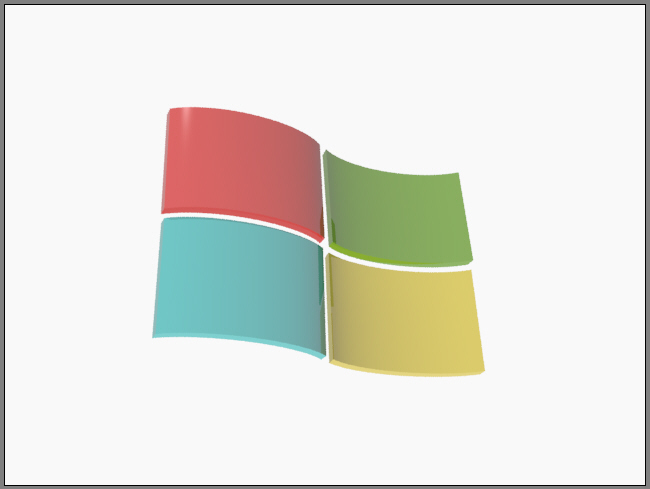
In this tutorial, you will learn how to create a Microsoft Windows logo in 3ds Max Design, as shown in Figure 1.

Figure 1  The Microsoft Windows logo

The following steps are required to complete this tutorial:
  1. Start Autodesk 3ds Max Design from the Start menu; the default Max Design interface is displayed, as shown in Figure 2.

    Figure 2  The default interface of 3ds Max Design
  2. Turn off the gridlines in Top, Front, and Left viewports by pressing the G key to make the objects visible.
  3. Choose Create > Shapes in the Command Panel and invoke the Arc tool from the Object Type rollout.
  4. Activate the Top viewport and create an arc, as shown in Figure 3.

    Figure 3  Creating an arc in the Top viewport
  5. You will now create a duplicate copy of the arc. To do so, select the arc in the Top viewport, press and hold the left mouse button and drag it down while holding the SHIFT key. Now release the left mouse button and the SHIFT key; the Clone Options dialog box is displayed. Select the Copy radio button in this dialog box and then choose the OK button; a duplicate copy of the arc is created, as shown in Figure 4.

    Figure 4  Creating a duplicate copy of the arc
  6. In the Top viewport, right-click on any arc and choose Convert To > Convert To Editable Spline from the cascading menu, as shown in Figure 5.

    Figure 5 Converting the arc into editable spline
  7. Choose the Modify tab in Command Panel. Next, choose the Vertex button to activate it in the Selection rollout.
  8. Expand the Geometry rollout and choose the Attach button. Next, select the other arc in the Top viewport and choose the Connect button.
  9. Select the one end of first arc and drag it to connect with the opposite end of second arc.
  10. Similarly, select the one end of second arc and drag it to connect with the opposite end of first arc. The two arcs are joined at their ends by the two lines, as shown in Figure 6.

    Figure 6  The two arcs joined at their ends by the two lines
  11. Choose the Vertex button again to deselect it. Next, select the arc in the Top viewport and name it as Arc01. It is now a single shape and not two separate arcs.
  12. With the Arc01 selected, select the Extrude option in Modifier List drop-down list to extrude the shape.
  13. In the Parameters rollout, set the value 900 in the Amount spinner; the shape is extruded, as shown in Figure 7.

    Figure 7  Extruding the shape
  14. Create a duplicate copy of the Arc01. To do so, select the Arc01 in the Top viewport and then press and hold the left mouse button along with SHIFT key. Drag it down and then release the left mouse button and the SHIFT key; the Clone Options dialog box is displayed. Make sure the Copy radio button is selected and name it as Arc02. Now, choose the OK button; the duplicate copy is created, as shown in Figure 8.

    Figure 8  Creating the duplicate copy of the shape
  15. Rotate the Arc02 180 degrees by using the Select and Rotate tool and align it with Arc01 in all viewports by using the Select and Move tool, as shown in Figure 9.

    Figure 9  Rotating the Arc02 and aligned it in all viewports
  16. Now, create a duplicate copy of the two shapes (Arc01 and Arc02) and drag them down, as shown in Figure 10.

    Figure 10  Creating a duplicate shape
  17. Invoke the Select and Move tool from the Main Toolbar and align the arc shape in all viewports to give a similar look just like Micorosoft Windows logo, as shown in Figure 11.

    Figure 11  Aligning the shapes in all viewports
  18. Finally, apply the material for every shape by using the Material Editor dialog box. The material you apply should match the colors of the real Microsoft Windows logo, as shown in Figure 12.

    Figure 12  Applying the color materials to the shape
  19. Invoke the Render Production tool from the Main Toolbar to render the scene. The final rendered image of the Microsoft Windows logo is shown in Figure 13.

    Figure 13  The final rendered image 
  20. Save the scene with the name Microsoft Windows logo.


Friday, March 15, 2013

mxdt0002-Creating the model of the chair using the lofting technique

In this section, you will use the lofting technique to create the model of the chair in 3ds Max Design. You will loft two shapes, star and circle along a path to get the desired shape as shown in Figure 1.


Figure 1  The model of the chair

Before starting the work, you need to change the unit settings in 3ds Max Design. To do so, start Autodesk 3ds Max Design; a default interface is displayed. Choose Customize > Units Setup from the menu bar; the Units Setup dialog box is displayed, as shown in Figure 2. Select the US Standards radio button and Inches radio button under the Display Unit Scale region. Now, choose the OK button to close this dialog box.


                                                   Figure 2  The Units Setup dialog box

The following steps are required to complete this tutorial:

1.   Activate the Front viewport. Choose Create > Shapes in the Command Panel and invoke the Line tool from the Object Type rollout.

2.   Expand the Keyboard Entry rollout and set the values in spinners as given next. Choose the Add button    after each entry:

       X: 4'0"                    Y: 0'0"                    Z: -2'8"
       X: 4'0"                    Y: 1'6"                    Z: -2'8"               
       X: 5'0"                    Y: 1'6"                    Z: -2'8"
       X: 5'0"                    Y: 3'0"                    Z: -2'8"

3.   Choose the Finish button after the final entry to complete the process and enter the name of the line as Chair Frame in the Name and Color rollout. The Chair Frame is created, as shown in Figure 3.


                                                                   Figure 3  The Chair Frame created

4.   Choose Create > Shapes in the Command Panel and invoke the Star tool from the Object Type rollout.

5.   Expand the Parameters rollout and set the value 5 in the Points spinner. In the Keyboard Entry rollout, set the values in the spinners as given next:

       Radius 1: 1'0"          Radius 2: 0'1 1/2"          Fillet Radius 1: 0'1"          Fillet Radius 2: 0'1"

6.   Choose the Create button and enter the name of the shape as Chair Shape in the Name and Color rollout.

7.   Choose Create > Shapes in the Command Panel and invoke the Circle tool from the Object Type rollout.

8.  In the Keyboard Entry rollout, set the value 1" in the Radius spinner and then choose the Create button. Enter the name as Chair Rail in the Name and Color rollout.

9.   Select Chair Frame and choose Create > Geometry in the Command Panel. Select the Compound Objects in the drop-down list below the Geometry button.

10. Invoke the Loft tool from the Object Type rollout.

11. In the Creation Method rollout, choose the Get Shape button. Now, select the Chair Shape in the viewport; the object is lofted. In the Name and Color rollout, enter the name of the lofted object as Frame.

12. Make sure the Frame is selected. Next, choose the Modify tab in the Command Panel. Expand the Parameters rollout and set the value 10 in the Path spinner.

13. Choose the Get Shape button in the Creation Method rollout and select the Chair Rail in any viewport; the new shape is created, as shown in Figure 4.

                                               
                                                         Figure 4  The new shape of the chair created

14.  Activate the Top viewport. Choose Create > Geometry in the Command Panel and select the Extended Primitives option from the drop-down list below the Geometry button.

15.  Invoke the Chamfer Box tool from the Object Type rollout.

16.  Expand the Keyboard Entry rollout and set the values in the spinners as given next:

        X: 3'11''               Y: 2'8"               Z: 1'7"
        Length: 1'6"          Width: 1'6"        Height: 0'3"         Fillet: 0'1"

17.  Choose the Create button and enter the name as Chair Seat in the Name and Color rollout.

18.  Make sure that Chamfer Box tool is active and  activate the Left viewport.

19.  Expand the Keyboard Entry rollout and set the values in the spinners as given next:

        X: -2'8"                Y: 3'0"                 Z: -4'11"
        Length: 0'8"          Width: 1'3"          Height: 0'3"          Fillet: 0'3"

20. Choose the Create button; the model of the chair is created, as shown in Figure 5.

                                                         
                                                           Figure 5  The model of the chair

21. Invoke the Render Production tool from the Main Toolbar; the final rendered output of the chair is displayed in a render window, as shown in Figure 6.

                                         
                                             Figure 6  The final rendered image of the chair

22.  Choose Save from the Application Menu to save the model.